
Best smart thermostats for simple vs advanced features are available with very different levels of functionality. Some models focus on simple temperature control, basic scheduling, smartphone access, and easy installation, while advanced models add features such as learning schedules, occupancy detection, remote room sensors, energy reports, indoor air-quality monitoring, voice assistants, and advanced HVAC support.
Choosing between a simple and advanced smart thermostat mainly depends on how much control you actually need. A small home with a predictable schedule may benefit from a straightforward thermostat, while a large household with multiple rooms, changing schedules, or complex HVAC equipment may benefit from a more advanced model.
For example, Google’s current thermostat lineup distinguishes the Nest Thermostat as an energy-saving essentials model, while the Nest Learning Thermostat (4th gen) adds features such as learning, broader Best Smart Thermostat For Different HVAC Configuration, sensor support, Adaptive Eco, and smart ventilation.
ecobee similarly offers different feature levels, from the Smart Thermostat Essential for core smart functions to the Ecobee Smart Thermostat Premium, which adds features such as a built-in occupancy sensor, indoor air-quality monitoring, an included SmartSensor, and voice-assistant options.
1
Quick Comparison Of Best Smart Thermostat
Google Nest Thermostat Best for Simple Smart Features
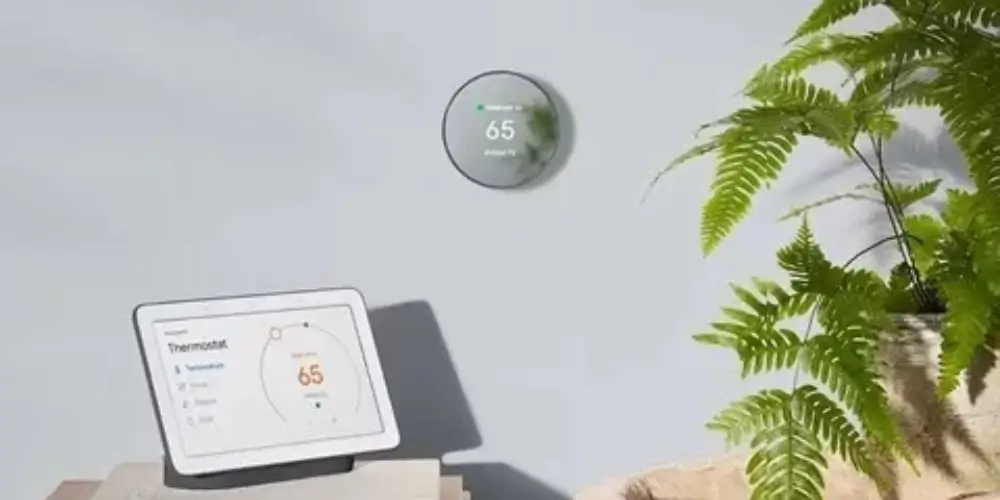
The Google Nest Thermostat is a good choice for users who want smart control without needing a large number of advanced features.
Google describes it as an option focused on energy-saving essentials. It supports scheduling, away features, app control through Google Home, voice control through compatible devices, and smart energy suggestions.
Best for: Users who want a smart thermostat without complicated features.
Key Features & Technology
★
Smart temperature control
Automatically helps maintain a comfortable indoor temperature based on your preferred settings.
★
Google Home integration
Works with Google Home to let you manage your thermostat through compatible smart-home devices.
★
Energy-saving features
Helps reduce energy use by adjusting temperature settings according to your schedule and needs.
★
Remote app control
Lets you monitor and adjust your home temperature remotely using the Google Home app.
ecobee Smart Thermostat Essential Best for Essential Smart Features

The ecobee Smart Thermostat Essential focuses on the core features most households need.
It provides app control, scheduling, energy reports, eco+ energy features, and support for compatible HVAC systems. ecobee also offers a separately sold Power Extender Kit for certain installations without a C-wire.
Best for: Households that want useful smart features without paying for premium extras.
Key Features & Technology
★
Smart temperature control
Provides convenient temperature management to maintain comfortable conditions throughout your home.
★
Remote app access
Allows you to adjust and monitor your thermostat settings remotely through the ecobee app.
★
Energy-saving scheduling
Helps manage heating and cooling schedules to improve comfort while reducing unnecessary energy use.
★
Smart-home integration
Connects with compatible smart-home systems for convenient control and automation.
Honeywell Home X2S Smart Thermostat Best for Simple Remote Control
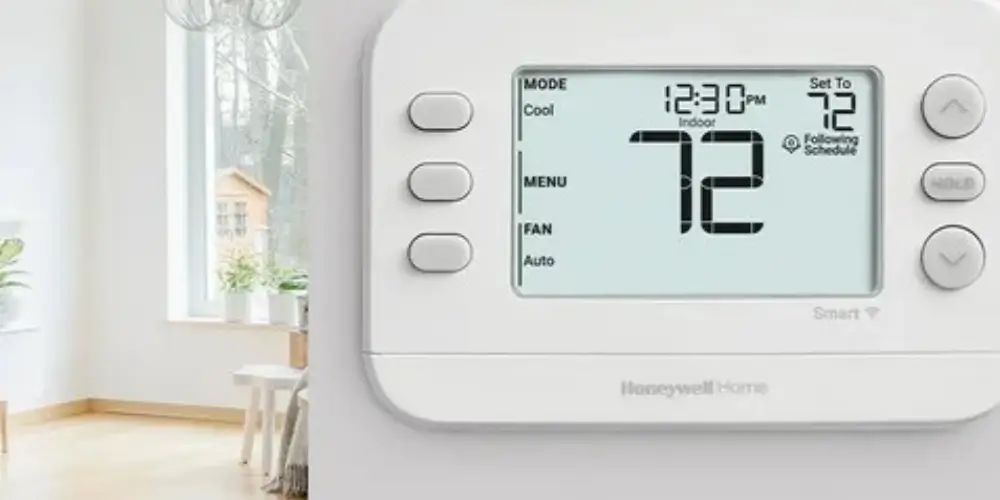
The Honeywell Home X2S focuses on straightforward smart control.
Honeywell describes it as a smart thermostat with a traditional-style digital interface and buttons, along with remote scheduling through its app.
Best for: Users who prefer simple controls over advanced automation.
Key Features & Technology
★
Smart scheduling
Lets you create temperature schedules that automatically adjust heating and cooling throughout the day.
★
Remote temperature control
Allows you to manage indoor temperature settings remotely through a compatible mobile app.
★
Energy-saving operation
Helps optimize heating and cooling operation to avoid unnecessary energy consumption.
★
App-based management
Provides convenient access to thermostat settings and temperature controls from your smartphone.
Honeywell Home X7B Smart Thermostat Best for Simple + Connected Homes
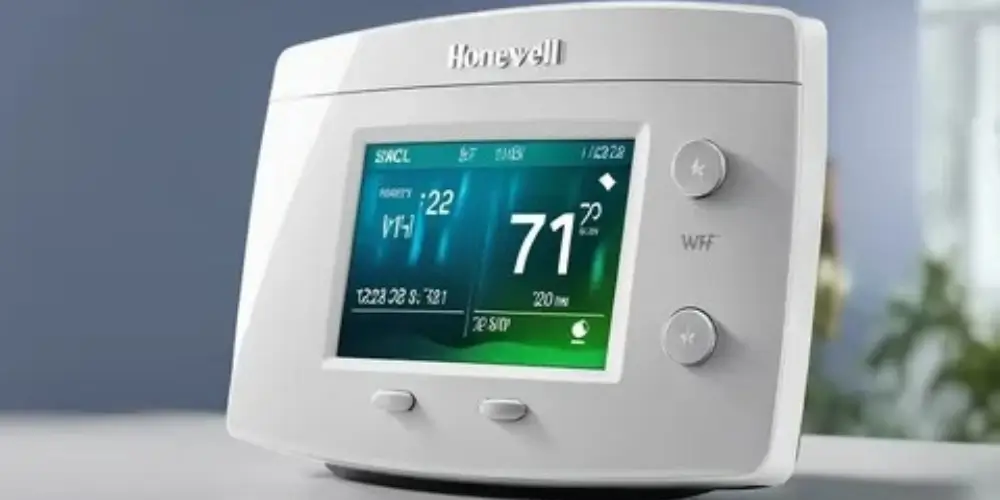
The Honeywell Home X7B provides a step up from basic thermostat control while keeping the interface relatively straightforward.
It features a 4.3-inch touchscreen, customizable display, remote app control, and compatibility with Amazon Alexa, Google Home, and Apple Home. It is also Matter certified.
Best for: Users who want simple controls with modern smart-home connectivity.
Key Features & Technology
★
Advanced temperature control
Provides precise temperature management for maintaining comfortable indoor conditions.
★
Smart scheduling
Allows customized heating and cooling schedules based on your daily routine and preferences.
★
Remote access
Lets you monitor and adjust thermostat settings remotely using a compatible mobile application.
★
Energy monitoring
Helps you understand and manage energy usage for more efficient heating and cooling.
Google Nest Learning Thermostat (4th Gen) Best for Advanced Automation

The Google Nest Learning Thermostat (4th gen) is designed for users who want more automation rather than manually controlling the thermostat every day.
Google lists features such as automatic schedule creation, energy-saving suggestions, temperature sensor compatibility, Adaptive Eco, natural heating and cooling, smart ventilation, and support for more HVAC configurations.
Best for: Users who want the thermostat to automatically adapt to their routines.
Key Features & Technology
★
Learning temperature preferences
Learns your temperature preferences over time and helps create a more personalized schedule.
★
Smart scheduling
Automatically supports temperature scheduling based on your routine and preferred comfort levels.
★
Remote app control
Allows you to adjust and monitor your thermostat from anywhere using the Google Home app.
★
Energy-saving insights
Provides useful information about energy use to help you make more efficient temperature choices.
ecobee Smart Thermostat Enhanced Best Mid-Range Option
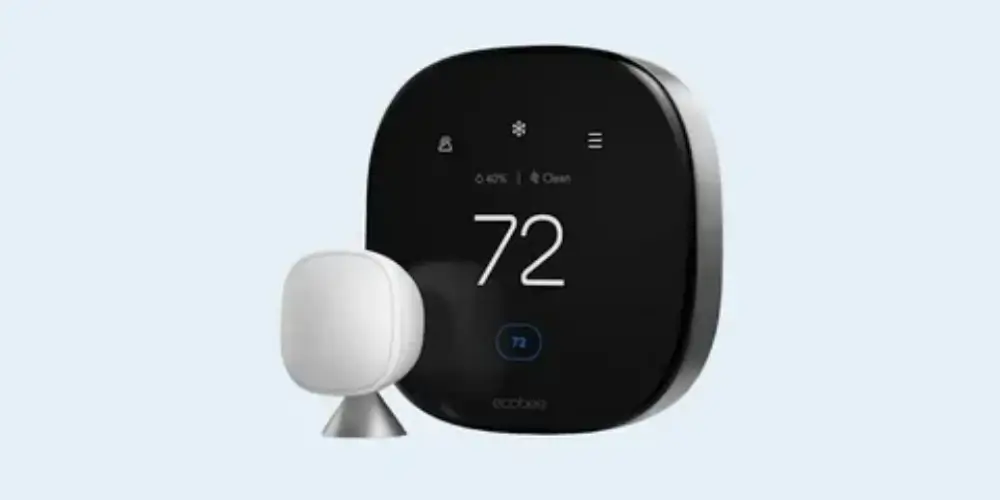
The ecobee Smart Thermostat Enhanced sits between basic and premium smart thermostats.
It includes built-in sensing technology, occupancy detection, automatic temperature adjustments, smartphone control, and compatibility with SmartSensors sold separately.
Best for: Households that want advanced features without moving to the most expensive category.
Key Features & Technology
★
Smart temperature control
Provides intelligent temperature management to help maintain comfortable indoor conditions.
★
Remote app management
Lets you control thermostat settings remotely through the ecobee mobile app.
★
Smart scheduling
Helps automatically manage heating and cooling according to your daily schedule.
★
Energy-saving features
Includes features designed to help reduce unnecessary heating and cooling energy use.
ecobee Smart Thermostat Premium Best for Advanced Smart Features
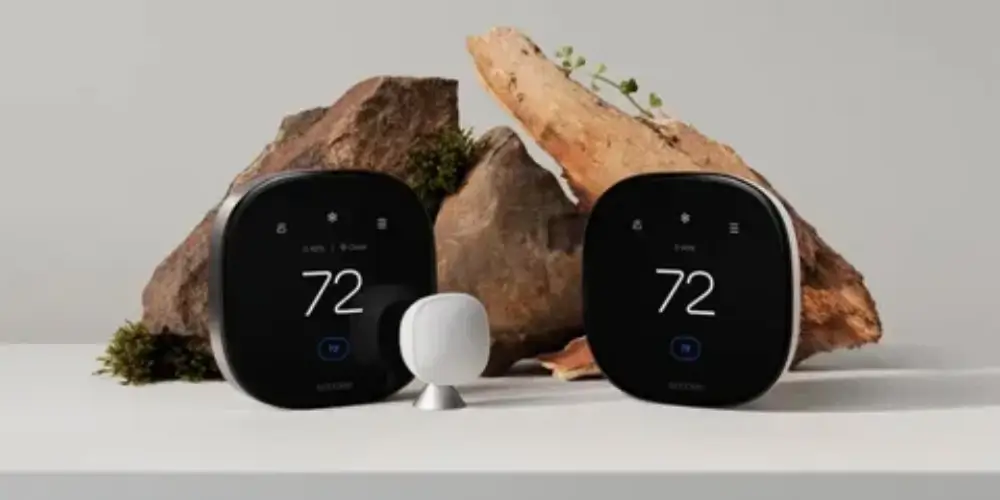
The ecobee Smart Thermostat Premium is designed for households that want a broader set of smart-home and comfort features.
ecobee lists features including a built-in radar occupancy sensor, indoor air-quality monitoring, an included SmartSensor, Apple Home integration, and a choice of Siri or Alexa Built-in.
Best for: Users who want the maximum number of smart thermostat features.
Key Features & Technology
★
Built-in smart sensor
Uses built-in sensing technology to help monitor conditions and support comfortable temperature control.
★
Room comfort monitoring
Helps monitor temperature and comfort conditions across different areas of your home.
★
Smart scheduling
Creates convenient heating and cooling schedules based on your household’s daily routine.
★
Energy-saving insights
Provides information about energy use to help you manage heating and cooling more efficiently.
Honeywell Home X7S Smart Thermostat Best for Advanced Occupancy and Room Sensing

The Honeywell Home X7S adds more advanced sensing capabilities while maintaining a modern thermostat interface.
It includes advanced occupancy and presence detection and can work with optional room temperature sensors to help prioritize selected rooms and reduce hot and cold spots.
Best for: Homes where room temperature differences and occupancy patterns matter.
Key Features & Technology
★
Smart temperature control
Provides convenient control over indoor temperatures for consistent household comfort.
★
Flexible scheduling
Allows you to create customized temperature schedules that fit your daily routine.
★
Remote app access
Lets you monitor and adjust thermostat settings remotely through a compatible smartphone app.
★
Energy-saving settings
Provides settings that can help reduce unnecessary heating and cooling energy consumption.
Sensor-Compatible Smart Thermostat Best for Large Homes
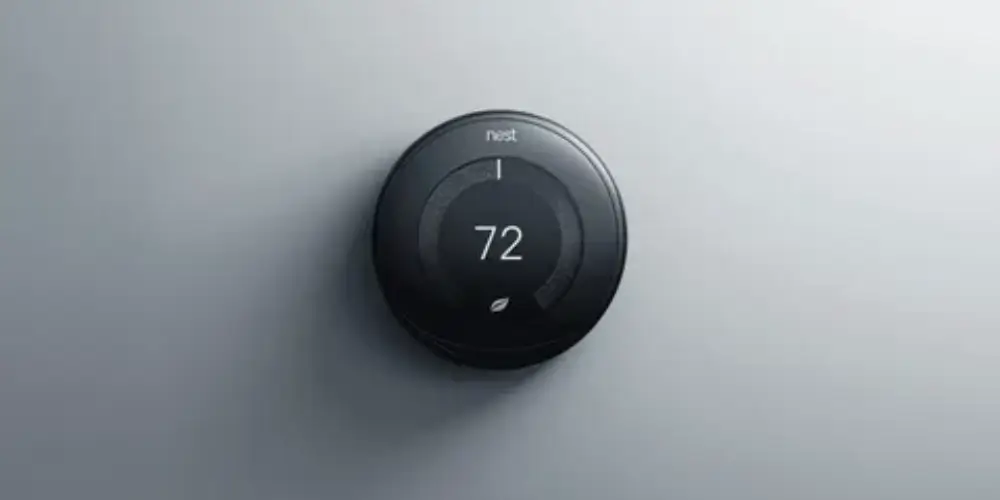
A sensor-compatible thermostat can be particularly useful when the thermostat’s physical location doesn’t represent the temperature in the most important rooms.
For example, the hallway might be comfortable while:
- Upstairs bedrooms are too warm
- Basement rooms are too cold
- A home office gets warmer during the day
- A nursery needs closer temperature monitoring
Remote sensors can provide additional temperature information to compatible thermostats.
Best for: Large homes with uneven temperatures.
Key Features & Technology
★
Multi-room temperature sensing
Uses compatible sensors to monitor temperatures across multiple rooms for better comfort management.
★
Room-level comfort control
Helps manage temperature in individual areas according to different household comfort preferences.
★
Smart scheduling
Allows heating and cooling schedules to be customized around your household’s daily routine.
★
Remote temperature management
Lets you monitor and adjust temperature settings remotely using a compatible app.
Multi-Stage Smart Thermostat Best for Advanced HVAC Systems
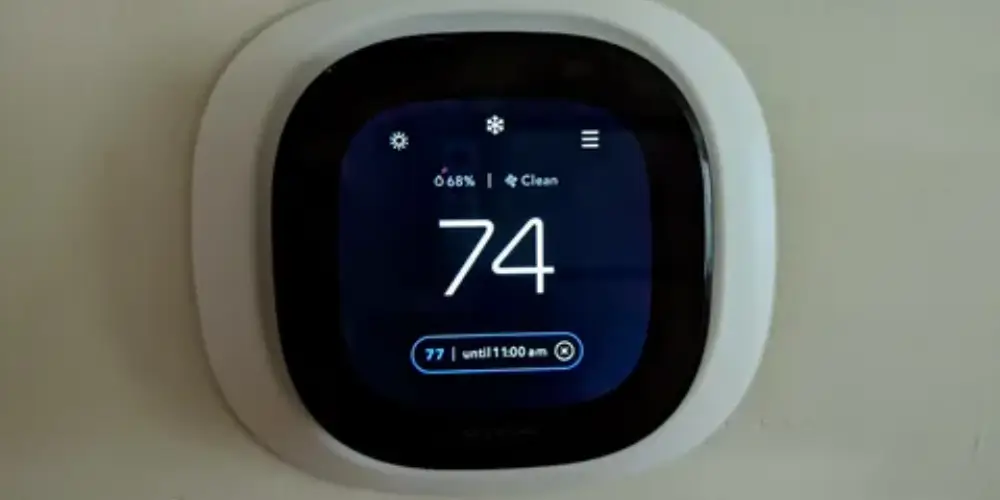
A basic smart thermostat may be enough for a simple single-stage HVAC system, but more advanced HVAC equipment can require additional thermostat support.
Advanced systems may include:
- Two-stage heating
- Two-stage cooling
- Heat pumps
- Auxiliary heat
- Multiple heating/cooling stages
- Humidifiers
- Dehumidifiers
- Ventilation equipment
The thermostat should be selected according to the actual HVAC configuration rather than simply choosing the model with the most smart features.
For example, ecobee notes that the Smart Thermostat Essential supports certain multi-stage configurations but recommends Premium for systems requiring both multi-stage heating and cooling.
Best for: Homes with complex HVAC equipment.
Key Features & Technology
★
Multi-stage HVAC support
Designed to work with compatible multi-stage heating and cooling systems for flexible operation.
★
Advanced temperature control
Provides more precise management of indoor temperatures for consistent household comfort.
★
Smart scheduling
Allows customized temperature schedules based on different times and household routines.
★
Energy-saving operation
Helps manage heating and cooling cycles efficiently to reduce unnecessary energy use.
Best Smart Thermostats by Feature Level
| Need | Best Choice |
| Best Simple Thermostat | Google Nest Learning Thermostat |
| Best Essential Features | ecobee Smart Thermostat Premium |
| Best Simple Honeywell | Google Nest Thermostat |
| Best Simple + Smart Home | ecobee Smart Thermostat Essential |
| Best Advanced Overall | ecobee Smart Thermostat Enhanced |
| Best Mid-Range Advanced | Sensor-compatible thermostat |
| Best Premium Features | Honeywell Home T9 |
| Best Advanced Room Sensing | Room-sensor-compatible thermostat |
| Best for Large Homes | ecobee Smart Thermostat Enhanced |
| Best for Complex HVAC | Apple Home-compatible ecobee |
Buying Guides
Decide How Much Automation You Need
This is the first question to ask.
Choose Simple Features If:
You manually adjust temperature often.
- Your schedule rarely changes.
- You don’t need room sensors.
- You only want smartphone control.
- Your HVAC system is straightforward.
Choose Advanced Features If:
Your schedule changes frequently.
- You want automatic temperature adjustments.
- Your home has hot and cold spots.
- You want room sensors.
- You want occupancy detection.
- You want detailed energy information.
Check Whether You Need Learning Features
Learning thermostats can automatically create or adjust schedules based on household behavior.
Google’s Nest Learning Thermostat, for example, can automatically create a schedule based on your routine and preferences.
If you prefer complete manual control, however, a simpler thermostat may be better.
Decide Whether You Need Room Sensors
Room sensors are one of the biggest differences between basic and advanced thermostats.
Consider sensors if:
- Bedrooms are warmer than the hallway.
- Upstairs is hotter than downstairs.
- Your home office has different temperature needs.
- You want to prioritize a particular room.
Honeywell’s X7S, for example, supports optional room sensors for prioritizing selected rooms and reducing hot and cold spots.
Consider Occupancy Detection
Advanced thermostats can detect whether people are home or occupying certain areas.
This can help with:
- Automatic away settings
- Energy savings
- Comfort adjustments
- Room prioritization
ecobee’s Enhanced and Premium models include advanced occupancy sensing features.
Consider Indoor Air Quality
If indoor air quality is important to your household, look for a thermostat that includes air-quality monitoring.
The ecobee Smart Thermostat Premium includes a built-in indoor air-quality monitor, while this feature is not present across the entire ecobee lineup.
Check Smart-Home Compatibility
Think about the ecosystem you already use.
Google Home
Nest thermostats are naturally suited to Google Home.
Apple Home
Look for Apple Home-compatible thermostats.
Amazon Alexa
Consider Alexa-compatible models.
Multiple Platforms
If your home uses multiple ecosystems, look for broad compatibility.
Honeywell’s X7B, for example, supports Amazon Alexa, Google Home, and Apple Home and is Matter certified.
Check Your HVAC System
Don’t select a thermostat only by its smart features.
First identify:
- Heating type
- Cooling type
- Number of stages
- Heat-pump configuration
- Auxiliary heat
- Humidifier/dehumidifier
- Ventilation equipment
- C-wire availability
A simple thermostat may not support all advanced HVAC configurations.
Consider Your Household Size
Small Household
A basic smart thermostat may be enough.
Medium Household
A thermostat with scheduling and occupancy detection may be useful.
Large Household
Consider room sensors, occupancy detection, and advanced scheduling.
Consider Your Budget
Basic
Focus on:
- Wi-Fi
- App control
- Scheduling
Mid-Range
Add:
- Occupancy detection
- Energy monitoring
- Sensor compatibility
Premium
Consider:
- Included room sensors
- Air-quality monitoring
- Voice assistants
- Advanced HVAC support
- More automation
Check Installation Requirements
Before buying, check:
- C-wire requirement
- HVAC compatibility
- Number of wires
- Power requirements
- Included accessories
- Optional sensors
- Power extender requirements
For example, ecobee states that its Smart Thermostat Essential may require a separately sold Power Extender Kit in installations without a C-wire.
Consider How Much Information You Want
Simple thermostats generally show the basics:
- Current temperature
- Target temperature
- Heating/cooling status
Advanced models may provide:
- Humidity
- Energy usage
- Indoor air quality
- Occupancy
- Weather
- HVAC runtime
- System alerts
Choose based on whether you’ll actually use this information.
Think About Long-Term Needs
A simple thermostat may be enough today, but your needs can change.
You might later add:
- Smart speakers
- Room sensors
- Home-office equipment
- Additional HVAC equipment
- Smart-home automation
If future expansion matters, choose a thermostat with broader compatibility.