
The best smart thermostats based on home size for a home depends not only on the HVAC system but also on Smart thermostat based on home size, number of rooms, number of floors, temperature differences, and how the space is used. A thermostat that works well in a small apartment may not be the best choice for a large multi-story house with hot and cold spots.
For smaller homes, a simple smart thermostat with scheduling, smartphone control, and basic automation may be enough. Larger homes can benefit from thermostats that support remote room sensors, occupancy detection, multi-zone HVAC systems, and advanced temperature management.
Room sensors are particularly useful when the temperature near the main thermostat does not accurately represent the temperature in other parts of the home. ecobee, for example, offers SmartSensors that can detect temperature and occupancy in individual rooms and use those readings to help manage comfort.
The right choice should therefore consider home size, HVAC configuration, sensor support, C-wire requirements, smart-home compatibility, and the number of rooms that need temperature monitoring.
1
Quick Comparison Of Best Smart Thermostat
Google Nest Thermostat Best for Small Homes

The Google Nest Thermostat can be a good choice for smaller homes and apartments where one thermostat location provides a reasonably accurate representation of the home’s temperature.
Smaller spaces generally have fewer rooms and less temperature variation, so advanced remote sensing may not be necessary.
Best for: Apartments, small houses, and homes with relatively consistent temperatures.
Key Features & Technology
★
Smart Scheduling
Creates temperature schedules based on your daily routine.
★
Remote Control
Lets you adjust temperature through the Google Home app.
★
Energy Saving
Helps reduce energy use through efficient temperature control.
★
HVAC Monitoring
Provides useful information about your heating and cooling system.

The Google Nest Learning Thermostat is a good option for homeowners who want more automation than a basic smart thermostat.
It can learn temperature preferences and help automate schedules, reducing the amount of manual programming required.
Best for: Small and medium-sized homes where the main thermostat location represents most of the living space.
Key Features & Technology
★
Auto-Scheduling
Learns your routine and automatically adjusts temperature settings.
★
Learning Technology
Adapts to your preferences for personalized temperature control.
★
Remote Control
Lets you control your thermostat from your smartphone.
★
Energy Reports
Shows energy usage information to help identify savings opportunities.
ecobee Smart Thermostat Essential Best for Small to Medium Homes
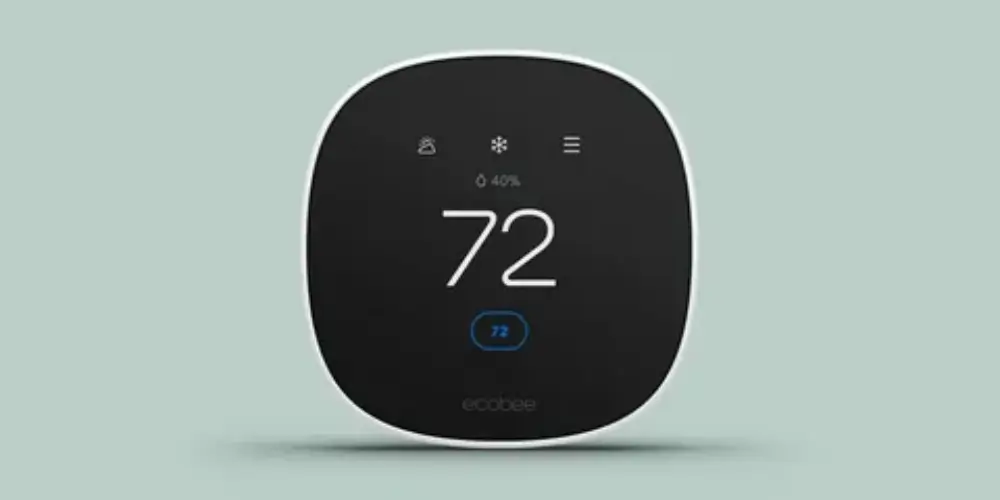
The ecobee Smart Thermostat Essential provides the core smart thermostat functions without requiring a premium feature set.
ecobee currently positions the Essential as its entry-level smart thermostat, with app control, scheduling, and smart-home integratioons.
Best for: Small and medium homes with relatively even temperatures.
Key Features & Technology
★
Occupancy Detection
Detects activity to help manage temperature more efficiently.
★
Remote Control
Allows temperature control through the ecobee mobile app.
★
Energy Savings
Helps reduce heating and cooling energy consumption.
★
Voice Assistant Support
Works with compatible voice assistants for convenient control
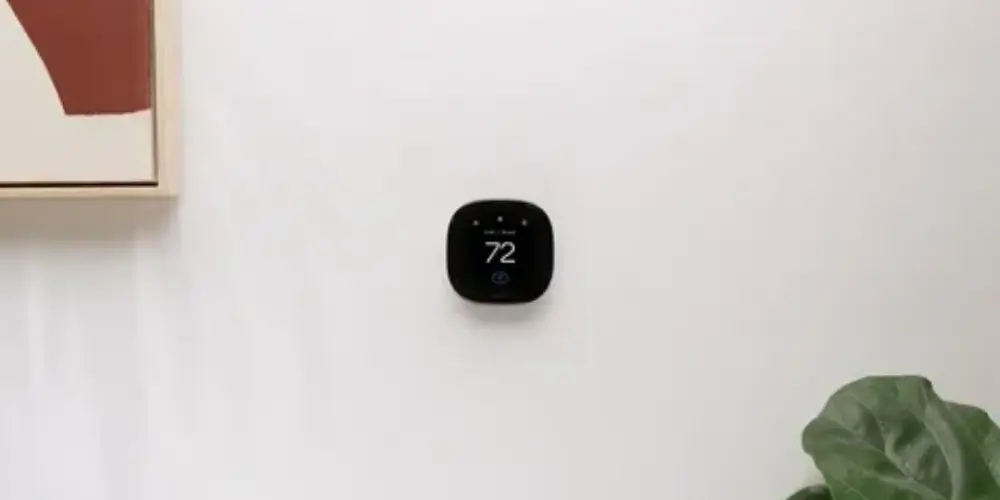
The ecobee Smart Thermostat Enhanced is useful for medium-sized homes where temperature differences between rooms may become more noticeable.
The thermostat can work with ecobee SmartSensors, allowing temperature and occupancy information to be collected from other rooms.
Best for: Medium homes with multiple frequently used rooms.
Key Features & Technology
★
SmartSensor Compatibility
Supports sensors for better temperature control across rooms.
★
Smart Scheduling
Automatically follows customized temperature schedules.
★
Occupancy Detection
Uses occupancy information to improve comfort and efficiency.
★
Energy Monitoring
Helps track heating and cooling energy consumption.
ecobee Smart Thermostat Premium Best for Large Homes
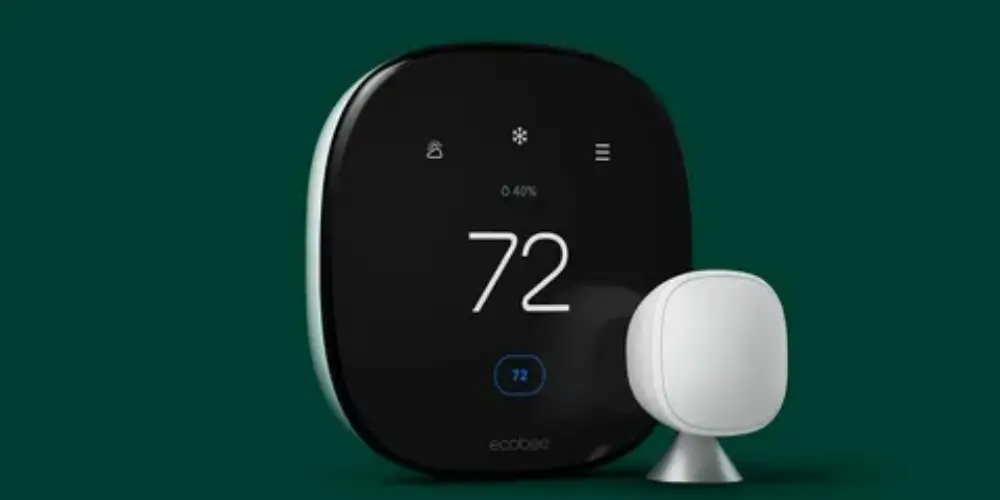
The ecobee Smart Thermostat Premium is particularly suitable for larger homes because of its broader room-sensing and smart-home capabilities.
The Premium model includes a SmartSensor and supports additional room sensors, allowing temperature and occupancy information to be considered across different areas of the home.
Best for: Large homes, multi-room layouts, and homes with noticeable hot and cold spots.
Key Features & Technology
★
SmartSensor Support
Uses room sensors to improve comfort throughout your home.
★
Air Quality Monitoring
Monitors indoor air quality and provides useful air-quality information.
★
Occupancy Detection
Detects occupancy to help optimize comfort and energy use.
★
Smart Scheduling
Creates customized schedules based on your preferences.
Honeywell Home T9 Best for Medium to Large Homes
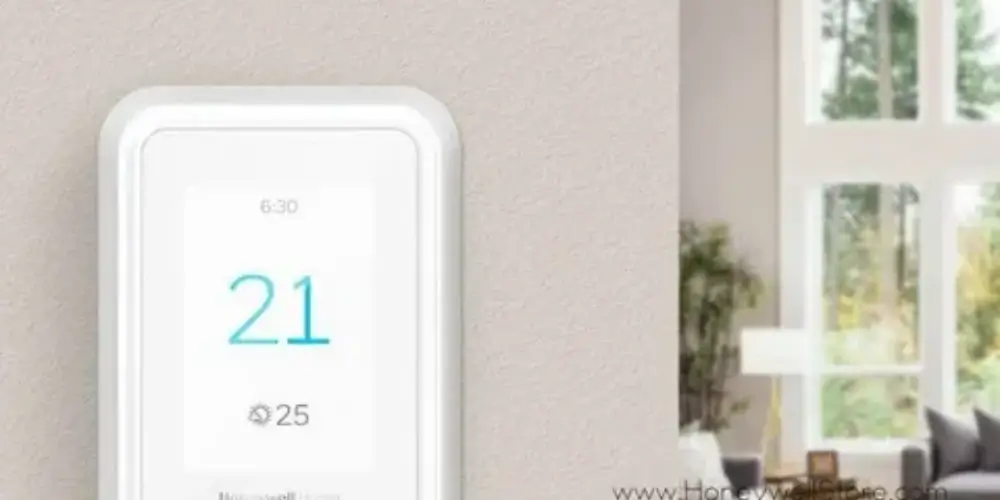
The Honeywell Home T9 is a strong option for homes where remote temperature sensors are important.
Remote sensors can help monitor rooms that are located far away from the main thermostat.
Best for: Medium and large homes with temperature differences between rooms.
Key Features & Technology
★
Room Sensors
Uses sensors to monitor temperature in different rooms.
★
Smart Scheduling
Creates flexible schedules for personalized comfort.
★
Geofencing
Can adjust settings based on your location.
★
Energy Reports
Provides energy information to help improve efficiency.
Sensi Smart Thermostat Best for Small to Medium Homes
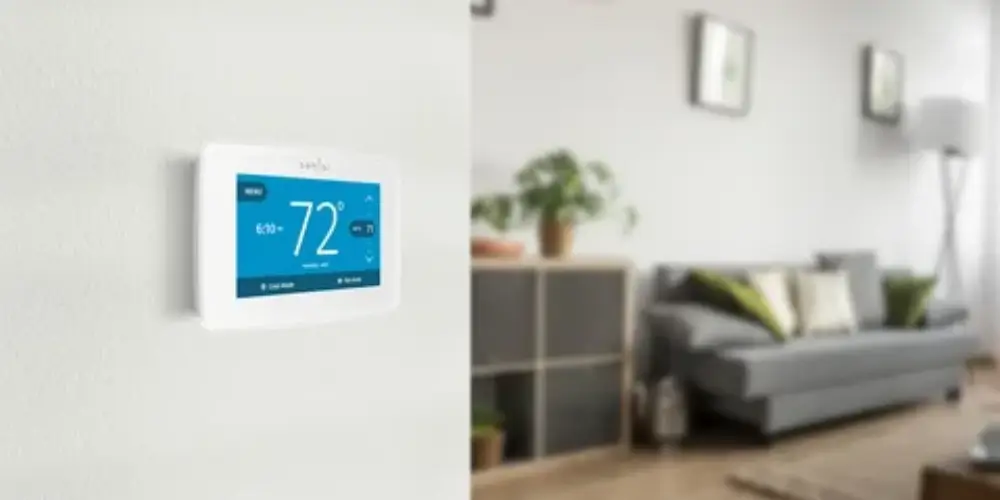
A Sensi Smart Thermostat can be a practical choice for homeowners who want smart functionality without an overly complicated system.
It provides common smart thermostat functions such as scheduling and remote control.
Best for: Small and medium homes where advanced room sensing isn’t required.
Key Features & Technology
★
Wi-Fi Control
Lets you control temperature remotely through Wi-Fi.
★
Flexible Scheduling
Allows customized heating and cooling schedules.
★
Energy Savings
Helps reduce energy consumption through efficient temperature control.
★
Voice Assistant Support
Works with compatible voice assistants for hands-free control.
Amazon Smart Thermostat Best for Small to Medium Homes With Alexa
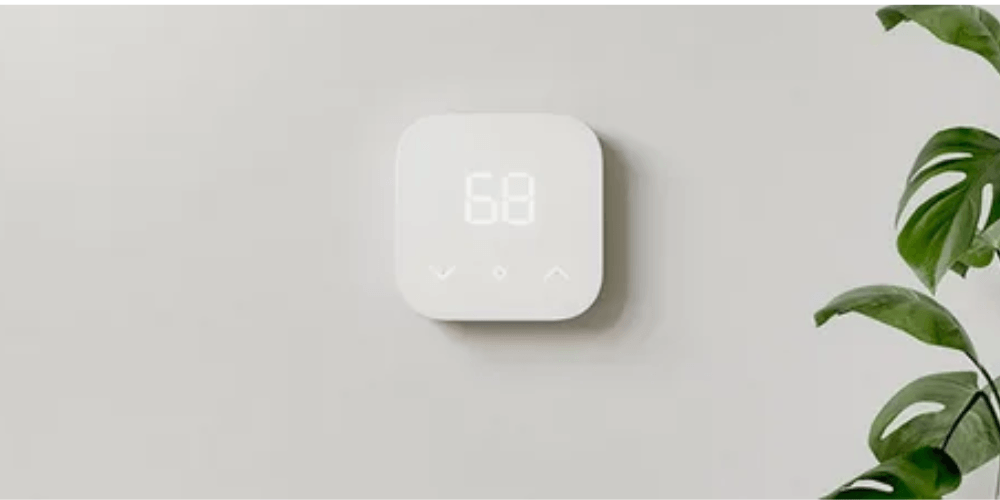
The Amazon Smart Thermostat is a useful option for households already using Alexa.
For a smaller or medium-sized home with relatively even temperatures, a single thermostat may be sufficient for controlling the entire HVAC system.
Best for: Small and medium homes that already use Alexa-compatible devices.
Key Features & Technology
★
Alexa Integration
Works with Alexa for convenient smart-home control.
★
Smart Scheduling
Helps create temperature schedules based on your routine.
★
Energy Savings
Uses smart features to help reduce energy consumption.
★
Remote Control
Allows temperature adjustments through the Alexa app.
Sensor-Compatible Smart Thermostat Best for Large Homes

A sensor-compatible smart thermostat can be more useful than a basic thermostat when a home contains multiple rooms with different temperatures.
Remote sensors can be placed in:
- Bedrooms
- Living rooms
- Home offices
- Upstairs rooms
- Frequently used spaces
They allow the thermostat system to gather temperature information away from the main thermostat.
Best for: Large homes with multiple rooms or floors.
Key Features & Technology
★
Room Sensors
Monitors temperatures across different rooms in your home.
★
Multi-Room Monitoring
Helps maintain more consistent temperatures throughout the house.
★
Temperature Balancing
Uses sensor readings to improve comfort between rooms.
★
Occupancy Detection
Can use room activity information for smarter temperature control.
Multi-Zone Smart Thermostat System Best for Very Large Homes

For very large homes, a single thermostat may not be the ideal solution.
A multi-zone HVAC system divides the home into separate zones, allowing different areas to be heated or cooled independently.
For example:
- Zone 1 → Downstairs
- Zone 2 → Upstairs
- Zone 3 → Bedrooms
Smart zoning can provide more precise control than simply adding sensors to a single-zone system.
Best for: Large and very large homes with compatible zoned HVAC systems.
Key Features & Technology
★
Multiple Zone Control
Allows different areas of the home to have separate temperature settings.
★
Independent Temperature Control
Lets each zone maintain its preferred temperature.
★
Room Sensors
Monitors temperatures in individual rooms or zones.
★
Smart Scheduling
Creates separate schedules for different areas of the home.
Best Smart Thermostats by Home Size
| Home Size | Best Choice |
| Small Apartment | Google Nest Thermostat |
| Small House | Google Nest Learning Thermostat |
| Small–Medium Home | ecobee Essential |
| Medium Home | ecobee Enhanced |
| Medium–Large Home | Honeywell Home T9 |
| Large Home | ecobee Premium |
| Large Home Multi- Room | Sensor-compatible thermostat |
| Large Multi-Story Home | Multi-zone system |
| Alexa Home | Amazon Smart Thermostat |
| Alexa Home | Sensi Smart Thermostat |
| Extra-Large Home | Honeywell Home T9 Smart Thermostat |
| Luxury Large Home | ecobee Smart Thermostat Premium |
Buying Guide
Consider More Than Square Footage
Square footage alone does not determine which smart thermostat you need.
Also consider:
- Number of rooms
- Number of floors
- HVAC zones
- Insulation
- Window exposure
- Ceiling height
- HVAC capacity
- Thermostat location
- Hot and cold spots
A larger home doesn’t automatically require an expensive thermostat.
Check the Number of Floors
A two-story house can have significant temperature differences between floors.
For example:
Downstairs: Comfortable
Upstairs: Too warm
In this situation, remote temperature sensors or independent HVAC zones can be more useful than simply choosing a more expensive thermostat.
Consider Remote Room Sensors
Remote sensors are especially useful when the thermostat isn’t located in the room you care about most.
For example, if the thermostat is in a hallway but the bedroom is consistently warmer, placing a sensor in the bedroom can provide more relevant temperature information.
ecobee specifically uses SmartSensors to detect temperature and occupancy in rooms and help adjust comfort based on room use.
Check HVAC Zones
Before buying a smart thermostat, determine whether your home has:
- One HVAC zone
- Two zones
- Three or more zones
If separate thermostats already control different areas, you may need a compatible multi-zone solution rather than trying to control everything with one thermostat.
Check C-Wire Requirements
Many smart thermostats require continuous power.
Before purchasing, check:
- Existing C-wire
- Available unused wires
- C-wire adapter support
- Power extender compatibility
Don’t assume that a thermostat will work simply because the existing thermostat has similar terminals.
Consider Temperature Differences
Walk through your home and identify rooms that are consistently:
- Too hot
- Too cold
- Slow to reach the desired temperature
- Different from the thermostat’s location
If several rooms have different temperatures, prioritize a thermostat with room-sensor support.
Consider Your Daily Routine
If your household spends most of its time in only a few rooms, a thermostat with occupancy-aware room sensors can be useful.
For example:
Morning
Kitchen sensor prioritized.
Daytime
Home-office sensor prioritized.
Evening
Living-room sensor prioritized.
Night
Bedroom sensor prioritized.
This type of approach is supported by smart thermostats that can use remote sensors and occupancy information.
Check Smart-Home Compatibility
Choose a thermostat compatible with your existing ecosystem.
Common platforms include:
- Google Home
- Amazon Alexa
- Apple Home
- Samsung SmartThings
The best thermostat for a large home may not be the best thermostat for your household if it doesn’t work with your existing smart-home setup.
Consider Installation Requirements
Before buying, check:
- HVAC compatibility
- C-wire requirement
- Heat-pump support
- Multi-stage support
- Auxiliary heat
- Wiring configuration
- Power accessories
Current buying guides also emphasize HVAC compatibility and wiring as more important than simply choosing a thermostat based on features.
Don’t Confuse Thermostat Capacity With HVAC Capacity
A smart thermostat doesn’t determine how much heating or cooling your home requires.
Your HVAC system must already be appropriately sized for the home.
The thermostat controls the system; it doesn’t increase the heating or cooling capacity of the equipment.
Choose Sensors Based on Problem Areas
You don’t necessarily need a sensor in every room.
Instead, prioritize rooms that are:
- Frequently occupied
- Too warm
- Too cold
- Far from the thermostat
- Located on another floor
This can reduce unnecessary accessory costs.
Consider a Multi-Zone System for Very Large Homes
If your home has multiple floors or separate HVAC equipment, zoning may be more effective than relying entirely on remote sensors.
A zoned HVAC system can independently control different areas.
Check the Thermostat’s Sensor Limits
Different thermostat systems support different numbers of sensors and different sensor functions.
Before buying, check:
- Maximum number of sensors
- Sensor range
- Temperature measurement
- Occupancy detection
- Battery life
- Sensor placement requirements
Consider Your Budget
Budget
Choose a basic smart thermostat with scheduling and app control.
Mid-Range
Choose a thermostat with optional room sensors.
Premium
Choose a system with included sensors, advanced automation, occupancy detection, and broader smart-home integration.
Think About Future Expansion
If you’re planning to add:
- More rooms
- Another floor
- Smart sensors
- HVAC zoning
- Smart-home devices
choose a thermostat ecosystem that can grow with your home.