
The best smart thermostats based heating & cooling needs for a home depends heavily on its heating and cooling requirements. A thermostat that works well with a basic single-stage furnace and air conditioner may not be the right choice for a heat pump, multi-stage HVAC system, dual-fuel system, radiant heating system, or home with auxiliary heat.
Smart thermostats can provide features such as automatic scheduling, remote temperature control, energy management, heat-pump optimization, room sensing, and multi-stage HVAC control. However, these features are only useful when the thermostat is compatible with the home’s heating and cooling equipment.
For example, Google’s current Nest Learning Thermostat (4th gen) supports multiple heating and cooling stages, heat pumps with auxiliary and emergency heat, and certain humidification, dehumidification, and ventilation equipment.
Before choosing a smart thermostat, identify whether your home uses conventional heating and cooling, a heat pump, multi-stage equipment, radiant heating, dual fuel, or another HVAC configuration.
1
Quick Comparison Of Best Smart Thermostat
Google Nest Learning Thermostat Best Overall for Heating and Cooling
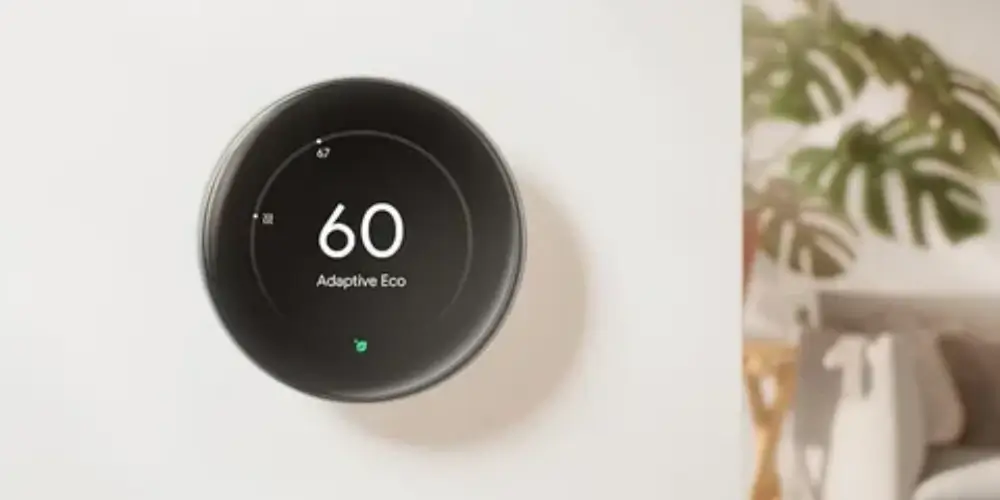
The Google Nest Learning Thermostat is a strong choice for homeowners who want a smart thermostat that can handle a wide range of heating and cooling configurations.
The current Nest Learning Thermostat (4th gen) supports conventional systems, heat pumps, multiple heating and cooling stages, auxiliary and emergency heat, and certain humidifier, dehumidifier, and ventilation configurations.
Best for: Homeowners who want one advanced thermostat for a wide range of heating and cooling needs.
Key Features & Technology
★
Learning Technology
Learns your temperature preferences and routine to automatically adjust heating and cooling.
★
Auto-Schedule
Creates a personalized temperature schedule based on your daily habits and preferences.
★
Remote Control
Lets you control your home’s temperature remotely using a compatible smartphone app.
★
Energy Saving
Helps reduce unnecessary heating and cooling by adjusting temperatures when energy use can be lowered.
Google Nest Thermostat Best for Basic Heating and Cooling

The Google Nest Thermostat is designed for homeowners who want basic smart temperature control without the more advanced capabilities of the Learning Thermostat.
It supports many common 24V heating and cooling systems, including furnaces, air conditioners, boilers, and heat pumps. Depending on the system, it supports one stage of heating and cooling plus a second stage of either heating or cooling.
Best for: Homes with straightforward heating and cooling requirements.
Key Features & Technology
★
Smart Scheduling
Allows you to create temperature schedules that match your daily routine.
★
Remote Control
You can adjust heating and cooling settings remotely through the compatible app.
★
Energy Monitoring
Provides useful information about heating and cooling patterns to help manage energy use.
★
Google Assistant Integration
Works with compatible Google smart-home features for convenient voice and connected control.
ecobee Smart Thermostat Premium Best for Advanced Heating and Cooling Needs
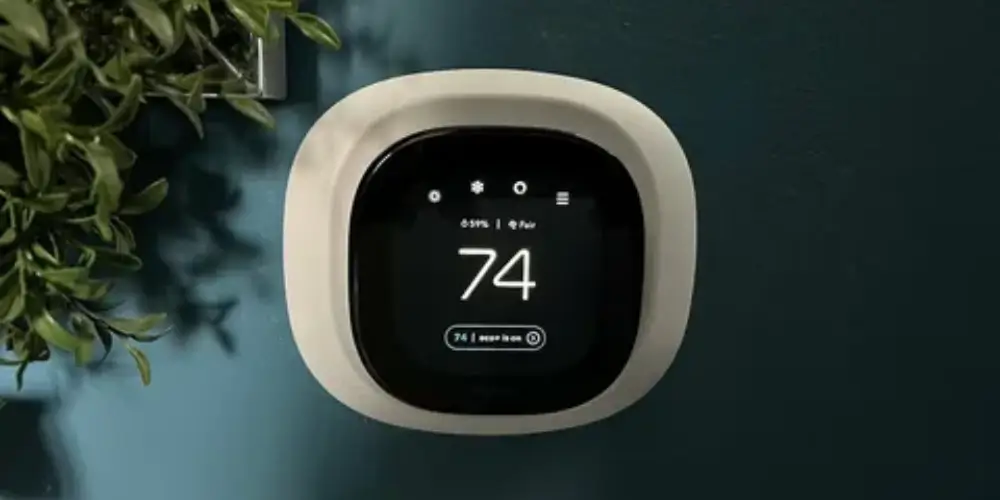
The ecobee Smart Thermostat Premium is a strong choice for homeowners who want advanced comfort management along with smart room sensing.
It can be particularly useful when different rooms have different temperatures or when the thermostat is located away from the rooms that are most frequently occupied.
Best for: Homeowners who want advanced heating and cooling control across multiple rooms.
Key Features & Technology
★
SmartSensor Compatibility
Supports room sensors that help monitor temperatures in different areas of your home.
★
Built-in Air Quality Monitoring
Monitors indoor air quality and provides information that can help improve your home’s environment.
★
Smart Home Integration
Works with compatible smart-home platforms for convenient connected temperature control.
★
Energy Reports
Provides energy-use information to help you understand and manage your heating and cooling habits.
Honeywell Home T9 Best for Multi-Room Heating and Cooling
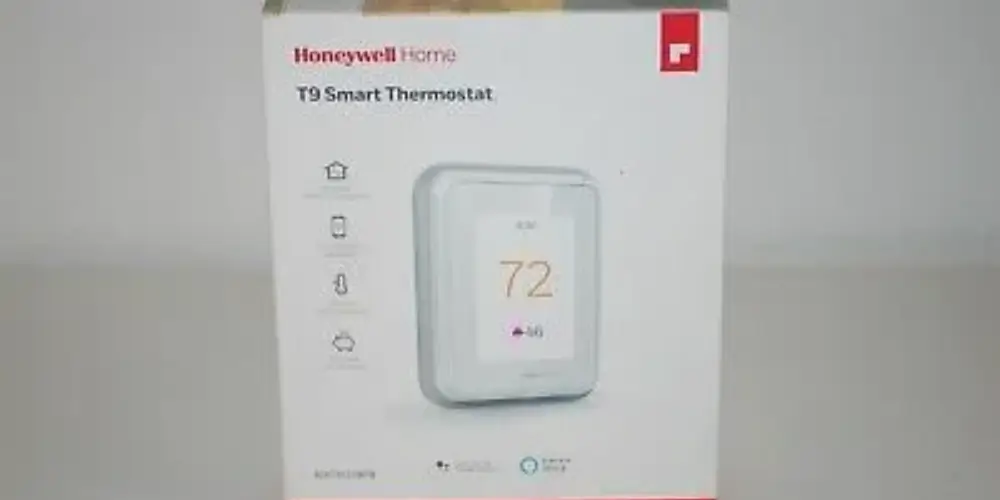
The Honeywell Home T9 is designed around remote room sensing, making it useful for homes where the temperature at the thermostat isn’t representative of other important rooms.
Remote sensors can be placed in bedrooms, offices, living rooms, or other frequently used areas.
Best for: Homes with hot and cold spots or rooms that need individual temperature monitoring.
Key Features & Technology
★
Room Sensors
Uses smart room sensors to monitor temperatures in different areas and improve comfort.
★
Smart Scheduling
Lets you create schedules that automatically adjust temperatures according to your routine.
★
Geofencing
Can use your location to help adjust the temperature when you leave or return home.
★
Multi-Room Temperature Control
Helps prioritize temperatures in different rooms for more personalized comfort.
Sensi Smart Thermostat Best for Conventional Heating and Cooling
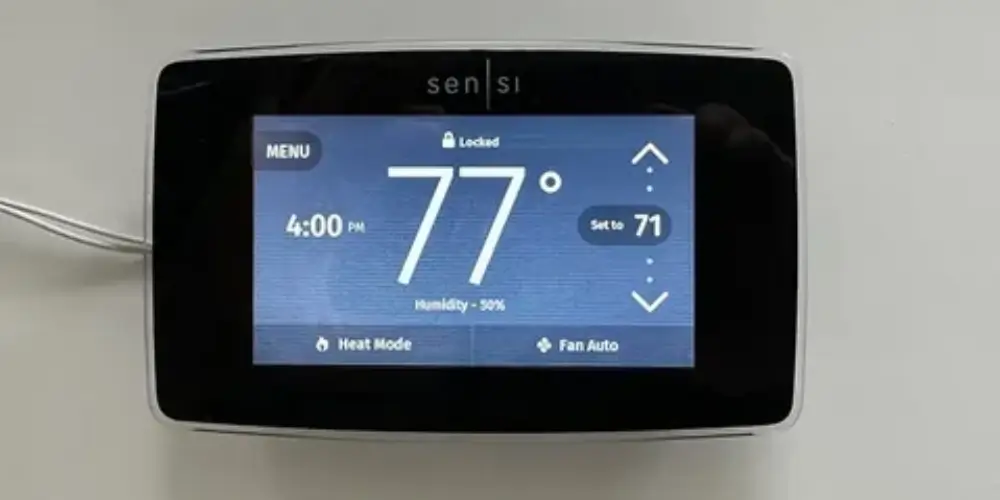
A Sensi Smart Thermostat can be a practical choice for homeowners with conventional HVAC systems who want smart features without a complicated setup.
It can provide smartphone control, scheduling, and temperature management depending on the specific model.
Best for: Conventional single-stage heating and cooling systems.
Key Features & Technology
★
Programmable Scheduling
Allows you to set heating and cooling schedules based on your daily activities.
★
Remote Access
Lets you change temperature settings remotely through a compatible smartphone app.
★
Energy Usage Reports
Provides information about heating and cooling usage to help you manage energy consumption.
★
Smart Home Integration
Connects with compatible smart-home platforms for convenient control and automation.
Amazon Smart Thermostat Best for Alexa-Based Heating and Cooling
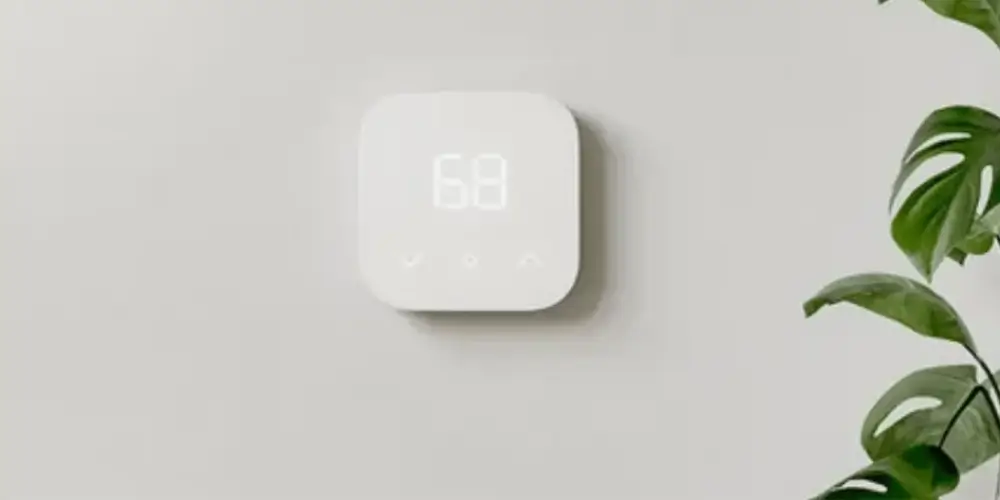
The Amazon Smart Thermostat can be a convenient option for households already using Alexa.
Users can integrate thermostat control into their existing smart-home routines where supported.
Best for: Homeowners who primarily use Alexa for smart-home control.
Key Features & Technology
★
Alexa Integration
Works with compatible Alexa features to provide convenient smart-home and voice control.
★
Smart Scheduling
Helps create automatic temperature schedules based on your household’s routine.
★
Remote Control
Allows you to manage heating and cooling settings remotely using a compatible app.
★
Energy Saving
Can help reduce unnecessary energy use through automatic temperature adjustments and scheduling.
Heat Pump-Compatible Smart Thermostat Best for Heat Pump Systems
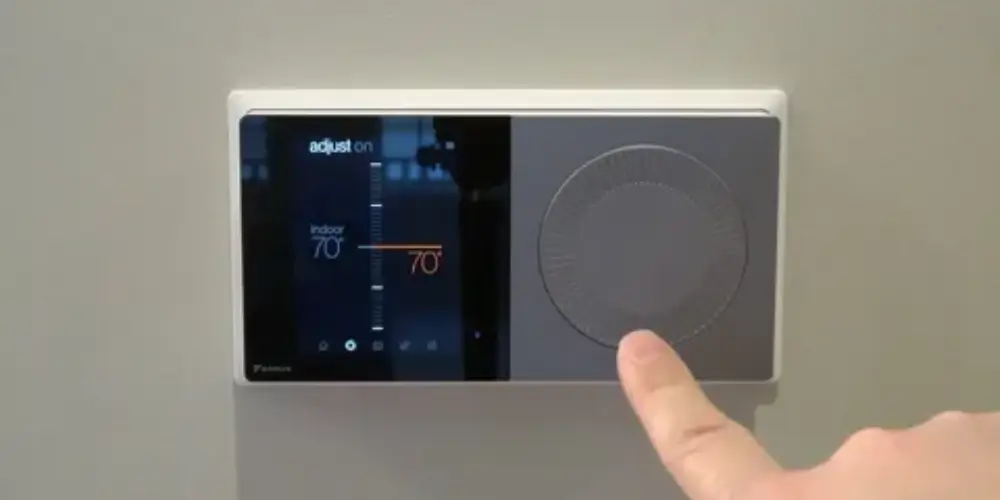
A heat pump-compatible smart thermostat is essential for homes that use a heat pump because heat pumps can have different heating and cooling requirements from conventional furnace-and-air-conditioner systems.
Depending on the equipment, the thermostat may need to manage:
- O/B reversing valve
- Auxiliary heat
- Emergency heat
- Multiple heat-pump stages
- Fan operation
- Cooling
Google’s compatibility information confirms that compatible Nest models support heat pumps with auxiliary or emergency heat, while more advanced models support multiple heat-pump stages.
Best for: Homes heated and cooled primarily by a heat pump.
Key Features & Technology
★
Heat Pump Support
Designed to work with compatible heat pump systems for both heating and cooling.
★
Auxiliary Heat Control
Supports compatible auxiliary heating systems when additional heat is required.
★
Smart Scheduling
Allows heating and cooling schedules to be customized around your daily routine.
★
Remote Access
Lets you monitor and adjust your heat pump system remotely using a compatible app.
Multi-Stage Smart Thermostat Best for Two-Stage Heating and Cooling

A multi-stage smart thermostat is designed for HVAC systems that have more than one stage of heating or cooling.
For example:
Stage 1
The system operates at a lower capacity for normal conditions.
Stage 2
Additional capacity activates when more heating or cooling is required.
This can help a properly designed HVAC system operate more efficiently and maintain a more stable indoor temperature.
The current Nest Learning Thermostat (4th gen), for example, supports up to three stages of conventional heating and two stages of cooling.
Best for: Homes with two-stage or multi-stage furnaces, heat pumps, or air conditioners.
Key Features & Technology
★
Multi-Stage Heating
Supports compatible HVAC systems with multiple heating stages for more precise temperature control.
★
Multi-Stage Cooling
Can manage compatible multi-stage cooling systems to provide efficient indoor comfort.
★
Smart Scheduling
Automatically follows customized heating and cooling schedules throughout the day.
★
Remote Control
Allows users to adjust temperature and HVAC settings remotely through a compatible app.
Dual-Fuel Smart Thermostat Best for Heat Pump + Furnace Systems
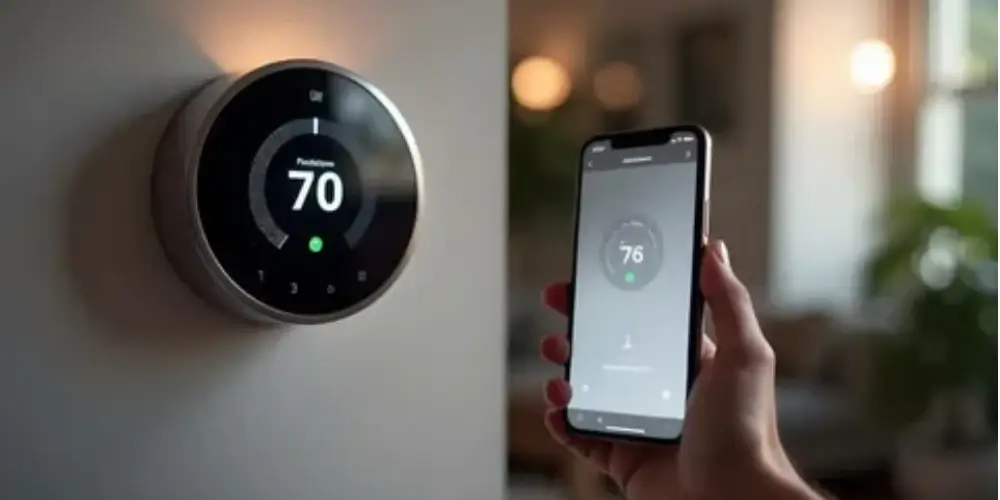
A dual-fuel system combines a heat pump with a separate furnace.
The heat pump may handle normal heating conditions, while the furnace can provide additional heat when outdoor conditions make heat-pump operation less suitable.
Compatible smart thermostats can coordinate these heating sources.
Google states that compatible Nest thermostats support dual-fuel systems, but professional installation is recommended because incorrect configuration can damage equipment.
Best for: Homes with heat pump + gas or oil furnace systems.
Key Features & Technology
★
Dual-Fuel System Support
Designed for compatible HVAC systems that combine two different heating sources.
★
Automatic System Changeover
Can automatically switch between heating sources based on supported system conditions.
★
Smart Scheduling
Lets users create customized heating and cooling schedules for different times of the day.
★
Remote Control
Provides remote access to temperature and system settings through a compatible mobile app.
Radiant-Heating-Compatible Smart Thermostat Best for Radiant Heating
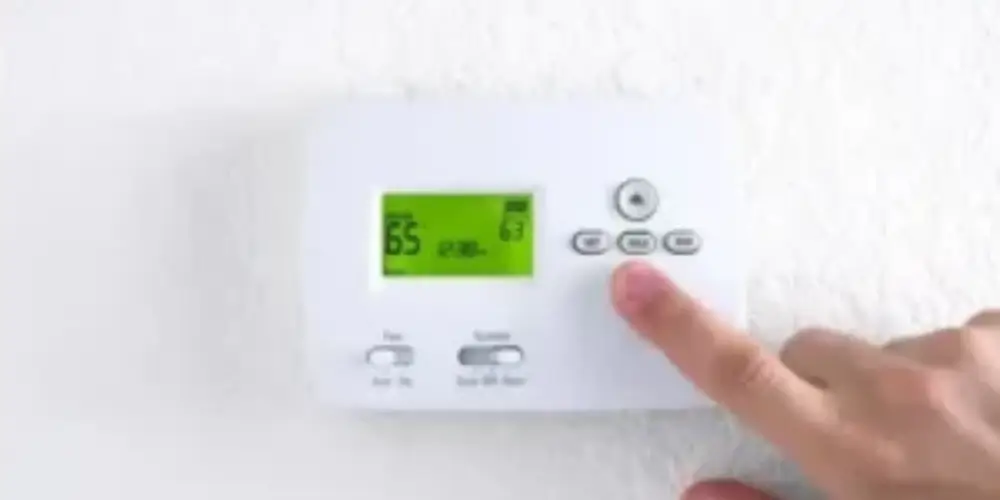
Homes with radiant floor heating, radiators, or hydronic heating need a thermostat designed to work with that type of system.
Radiant systems behave differently from forced-air systems because heat is transferred through water, electric heating elements, radiators, or other radiant surfaces.
Google’s Nest System Match includes a True Radiant feature for compatible radiant systems to provide predictable heating schedules.
Best for: Homes using compatible radiant floors or radiator-based heating.ctable heating schedules.
Key Features & Technology
★
Radiant Heating Support
Designed to control compatible radiant heating systems for consistent indoor warmth.
★
Floor Temperature Control
Supports temperature management for compatible floor-heating applications.
★
Remote Access
Lets users adjust radiant heating settings remotely through a compatible smart-home app.
★
Energy Management
Uses scheduling and smart temperature control to help avoid unnecessary heating and energy use.
Best Smart Thermostats by Heating and Cooling Need
| Heating/Cooling Needs | Best Choice |
| Best Overall | Google Nest Learning Thermostat |
| Basic Heating + Cooling | Google Nest Thermostat |
| Advanced Comfort | ecobee Smart Thermostat Premium |
| Multi-Room Temperature Control | Honeywell Home T9 |
| Conventional HVAC | Sensi Smart Thermostat |
| Alexa-Based Control | Amazon Smart Thermostat |
| Heat Pump | Heat-pump-compatible smart thermostat |
| Multi-Stage HVAC | Multi-stage smart thermostat |
| Dual Fuel | Dual-fuel-compatible thermostat |
| Radiant Heating | Radiant-compatible smart thermostat |
| Hot and Cold Spots | Sensor-compatible thermostat |
| Multiple HVAC Zones | Zoned smart thermostat system |
Buying Guides
Identify Your Heating System
First determine what provides heat to your home.
It could be:
- Gas furnace
- Oil furnace
- Electric furnace
- Heat pump
- Boiler
- Radiator
- Radiant floor
- Dual-fuel system
This is more important than choosing a thermostat based on appearance or price.
Identify Your Cooling System
Determine whether cooling comes from:
- Central air conditioner
- Heat pump
- Multi-stage air conditioner
- Zoned cooling system
- Other compatible HVAC equipment
The thermostat needs to support the specific cooling configuration.
Check How Many Heating Stages You Have
Look at the existing thermostat wiring or HVAC documentation.
You may have:
One stage: W1
Two stages: W1 + W2
Three stages: W1 + W2 + W3
The thermostat must support the number of stages your equipment uses.
Check How Many Cooling Stages You Have
Similarly, cooling may use:
- Y1
- Y2
A basic thermostat may not support advanced multi-stage equipment.
The current Nest Learning Thermostat (4th gen), for example, supports two stages of cooling.
Check for Heat Pump Wiring
If you have a heat pump, look for wiring associated with the reversing valve, commonly O/B.
You may also have:
- AUX
- E
- Y
- G
- C
- R
Don’t identify these wires by color alone. Use the terminal labels and HVAC documentation.
Check Auxiliary and Emergency Heat
Heat pumps in colder climates may use auxiliary heating.
Your thermostat should support the appropriate auxiliary heating configuration.
Some systems also have emergency heat, which has a separate function from normal auxiliary heat.
Check for Dual Fuel
If your home has:
Outdoor heat pump + indoor furnace
you likely have a dual-fuel system.
This requires careful thermostat configuration.
Professional installation is recommended for compatible Nest dual-fuel installations because incorrect configuration can cause equipment problems.
Check C-Wire Requirements
Smart thermostats need power.
Some can operate without a conventional C-wire in many systems, while others require one or a compatible power accessory.
For example, Google says the Nest Learning Thermostat (4th gen) is designed to work with or without a C-wire, though a C-wire or Nest Power Connector is required in limited cases
Consider Room Temperature Differences
If one room is always hotter or colder than another, look for:
- Room sensor support
- Occupancy detection
- Multi-room scheduling
- Zone control
A sensor-compatible thermostat can provide more useful temperature information than relying solely on the thermostat’s built-in sensor.
Consider Your Climate
Your heating and cooling needs depend partly on the climate.
Cold Climate
Prioritize:
- Heat-pump support
- Auxiliary heat
- Emergency heat
- Heat-pump optimization
Hot Climate
Prioritize:
- Reliable cooling control
- Multi-stage cooling
- Humidity management
- Scheduling
Mixed Climate
Look for:
- Strong heating and cooling support
- Heat-pump compatibility
- Energy-management features
- Smart scheduling
Consider Humidity Control
Some advanced HVAC systems include:
- Humidifiers
- Dehumidifiers
- Whole-home ventilation
If your system has these accessories, check whether the thermostat supports them.
The Nest Learning Thermostat (4th gen), for example, supports compatible humidifier, dehumidifier, and ventilation equipment.
Look for Energy-Management Features
Useful features include:
- Automatic scheduling
- Energy reports
- Temperature setbacks
- Heat-pump optimization
- Occupancy detection
- Eco modes
- Filter reminders
Google’s System Match can adjust certain Nest features according to the heating or cooling system detected during setup.
Consider Installation Complexity
Basic single-stage systems are generally easier to configure than:
- Heat pumps
- Dual-fuel systems
- Multi-stage HVAC
- Dual-transformer systems
- Whole-home humidity systems
- Zoned HVAC
Google specifically recommends professional help for some advanced configurations.
Check Smart-Home Compatibility
If you already use:
- Google Home
- Amazon Alexa
- Apple Home
- Matter-compatible devices
choose a thermostat that integrates with your existing ecosystem.
Check the Manufacturer’s Compatibility Tool
Don’t rely only on the product description.
Use the manufacturer’s compatibility checker when available.
Google’s compatibility tool asks about your heating system and wiring before installation and provides a custom wiring guide.